
Results
-
 £159.99
Omaggio (Euphonium Concerto No.4) (Euphonium Solo with Brass Band - Score and Parts) - Sparke, Philip
Omaggio was commissioned by Steven Mead in celebration of his 60th birthday and in memory of his father, Rex. He gave the premiere of the brass band version in Rome in March 2022, accompanied by the Italian Brass Band conducted by Filippo Cangiamilla. The concert band premiere took place on 6th July that year as part of the 2022 Spanish International Tuba Euphonium Conference, accompanied by the Banda municipal de msica de Malaga.The concerto is set in 3 continuous movements, which are united by a recurring syncopated interval of a fifth. The first movement, Fantasia, opens with this motive accompanying an extended monologue for the soloist. This is followed by a lengthy bridge passage by the band, which is eventually joined by the soloist, who guides the music back to the opening soliloquy, leading to an energetic central section. This develops until the opening material again returns to introduce the second movement, Ballad, which revolves around an expressive melody for the soloist, interspersed by accompanied cadenzas. The third movement, The King Triumphant, pays homage to Steven's late father, Rex, and its title alludes both to Rex's name (Rex being Latin for king) as well as his love of Eric Ball's Salvationist masterpiece, The Kingdom Triumphant. The finale is an energetic tour-de-force featuring an acrobatic 6/8 melody, which is interrupted twice by the magnificent hymn tune, Helmsley, which Ball uses so effectively in The Kingdom Triumphant. A galloping coda brings the work to a close.
Estimated dispatch 7-14 working days
-
 £72.99
Little Clover (Cornet Solo with Brass Band - Score and Parts) - Crausaz, Etienne
Irish Fantasy for Cornet and Brass Band. Due to its rarity, the four-leaf clover is considered lucky in western culture. But the common three-leaf shamrock, also known as Little Clover, is one of the symbols of Ireland, whose traditional music greatly influenced the general aesthetics of this piece. The work is in three parts: the first, in 6/8, is very lively and virtuosic. After a short cadenza, the second part introduces a theme tinged with melancholy, while the last part is a dance in 2/2 that reprises the theme of the second part to conclude the piece.Duration: 6.30
Estimated dispatch 7-14 working days
-
 £89.50
Symphonic Dimensions (Brass Band - Score and Parts) - Schwarz, Otto M.
Symphonic Dimensions is a powerful opening piece with a continually recurring motif. Beginning with a festive fanfare in which the leitmotif is heard for the first time, it continues in a buoyant 12/8 meter. The themes alternate again and again, in various instrumentations, and end in an epic finale. Symphonic Dimensions can equally be played at the end of a concert as a rousing finale.Duration: 3.45
Estimated dispatch 7-14 working days
-
 £69.95
Strange New Worlds (Brass Band - Score and Parts) - Graham, Peter
Strange New Worlds was commissioned by Nicholas Childs for the National Children's Brass Band of Great Britain with funds provided by Arts Council England.The COVID-19 pandemic made it necessary for the 2020 course to transition from residential to virtual and the work was designed to accommodate this change. The participants individually filmed themselves to a click track and the videos were collated to create a "virtual" performance. The premiere was streamed live on YouTube on August 7, 2020.The work is in 5 movements with a narrative dictated by the individual movement titles. Although to me this narrative is clearly defined, multiple scenarios present themselves. Some may interpret the story as being one from the ancients while others might identify with the science-fiction of H.G. Wells. Others still will relate to the recent surge of interest in 1980s culture and the Netflix series Stranger Things (to which the title of my work pays homage). Nor would it be unreasonable to consider the piece an analogy reflecting events in 2020. Listeners will decide the story (or message) for themselves.The five movements are: I. Things to Come; II. Descent to Darkness (featuring Cornets, Trombones and Percussion); III. Resistance (featuring Horns, Baritones, Euphoniums, Basses and Percussion); IV/V. Aftermath/A New HopeDuration: 8.00
Estimated dispatch 7-14 working days
-
 £57.99
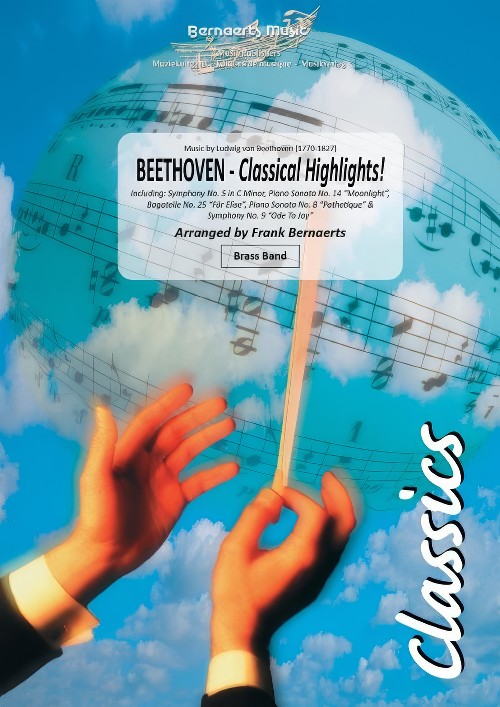
Beethoven - Classical Highlights! (Brass Band - Score and Parts) - Beethoven, Ludwig van - Bernaerts, Frank
Includes: Symphony No.5 in C minor; Piano Sonata No.14 Moonlight; Bagatelle No.25 Fur Elise; Piano Sonata No.8 Pathetique; Symphony No.9 Ode to Joy. Duration: 7.30
Estimated dispatch 7-14 working days
-
 £134.99
Alpina Brass (Brass Band - Score and Parts) - Van der Roost, Jan
Alpina Brass was the test piece for the first division of the Ftes Cantonales on 8 and 9 June 2019 in Naters, Switzerland. It consists of three movements, and features a variety of aspects, as is common for a competition work. However, as a whole, it has been written in such a way that it can perfectly serve as a concert work as well. It is a challenging piece for every section and offers colourful and melodic as well as spectacular rhythmic sequences and a most impressive ending!Duration: 11.00
Estimated dispatch 7-14 working days
-
 £102.99
Chameleon (Euphonium Solo with Brass Band - Score and Parts) - Doss, Thomas
Chameleon is a three-part solo piece for euphonium and brass band. The different styles within the piece provide lots of variety, requiring refined technique and a great deal of flexibility from the soloist. This composition was commissioned by Georg Pranger, to whom the piece is also dedicated. As a pioneer of the Austrian euphonium soloist scene, Pranger is committed to the unshackling of this wonderful instrument and the creation of great musical momentum, as achieved by this commission.Duration: 8.30
Estimated dispatch 7-14 working days
-
 £87.99
Queen Symphonic Highlights (Brass Band - Score and Parts) - Sparke, Philip
The British rock band Queen, formed in 1970, are one of the most popular bands of all time. The music of Queen already exists in numerous instrumental arrangements at all kinds of levels. However, arranger Philip Sparke has taken a unique approach: he has created an exceptional medley in a challenging, symphonic style from four of their greatest hits: Bohemian Rhapsody; Bicycle Race; Who Wants to Live Forever; We Are the Champions.Duration: 8.15
Estimated dispatch 7-14 working days
-
 £43.00
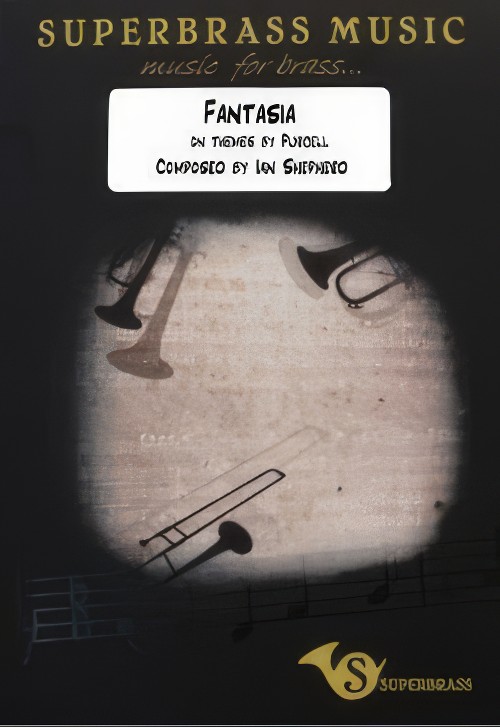
Fantasia on Themes by Purcell (Brass Band - Score and Parts) - Shepherd, Ian
Fantasia consists of three distinct sections that use thematic material from three separate pieces by Henry Purcell. The first section is based on the march from Funeral Music for Queen Mary which is dramatically dark and powerful but also uplifting. The Second section uses the devastatingly beautiful aria Dido's Lament or When I am laid in earth from the opera Dido and Aeneas as its basis and builds to enormous proportions, unlike the original aria. The third section begins with a haunting reference to the Rondo from Abdelazer. Gradually, this builds towards an exciting re-statement of the theme in the first section to the finale. Duration: 8.30
Estimated dispatch 7-14 working days
-
 £65.00
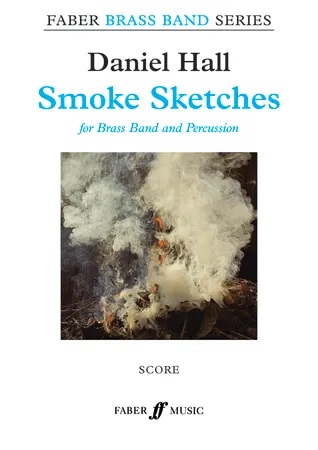
Smoke Sketches (Brass Band - Score and Parts) - Hall, Daniel
This colourful, jazzy suite draws inspiration from the ancient art of gazing into smoke from fire to find stories through the act of divination. Into the Blaze suggests someone briskly fire-walking, barefoot, with unexpected sparks fizzling from the ground. A Lonesome Ember captures the fleeting life of a small ember, beginning insignificantly and gradually evolving into a larger being before disappearing into ash, while Spark of Light bristles with life and energy. Smoke Sketches was composed at the invitation of Brass Bands England for the Intermediate Section of the 2017 National Youth Brass Band Championships of Great Britain.Duration: 8.00
Estimated dispatch 7-14 working days
 View Music