
Results
-
 £64.99
Lord of the Lake - Thierry Deleruyelle
Lord of the Lake is a work in three separate movements which tells the legend of the "Sea of Flines". Stephane Coquet, the conductor of the Flines-lez-Raches concert band, wanted to celebrate the 140th anniversary of his band by commissioning this work. The piece can be performed either on its own, or with a narrator who intervenes between each movement, telling this legend where children and their parents thwart the cruelty of a lord holed up in his castle.
Estimated dispatch 5-14 working days
-
 £64.40
The Master Plan! - Dean Jones
We all have a purpose...whether those are found in daily routines or much larger parts of our lives. Having a plan or a goal is a great way we can measure our success. Here's a small piece of music that explores 3 such elements:Covert Mission - a militaristic theme where the music conveys action and drama.Finding Someone - at some point, we share our lives with people who are special to us. The music has a more lyrical feel to help illustrate affection.Life Goals! - the strong rhythmic pattern to this section is the undertone for portraying a a sense of focus. We need to match desire with action when attempting something new - the sense of excitement and hope will need to be drawn from the music to convey this message.The music tells a compelling story of purpose, hope and passion....in the words of Col. Hannibal Smith from the A-Team, "I love it when a plan comes together!"
Estimated dispatch 5-14 working days
-
 £183.20
The Junction Point - John Brakstad
The railway between Oslo and Bergen, "Bergensbanen", was built in the years 1895 1909. This piece is dedicated to the railway labourers, the navvies, who did the hard work across the mountains. Most of the work, even in the tunnels, were done by hand. The official opening of the railway was in 1909, but there was also a celebration and a dynamite salute when the two teams of labourers and locomotives from East and West met in the mountains in October 1907. At this point, the rails were joined together with a joint in the national colours: "The Junction Point"!
Estimated dispatch 5-14 working days
-
 £119.99
The Patriots - Jan de Haan
The Dutch patriottentijd (literally 'Time of the Patriots') was a period of political instability in the 1780s. The country was led by regents who were occupied with their own personal interests rather than dedicating themselves to the needs of the people. In this revolutionary period, the devoted republican Patriots were in conflict with the Orangists. A civil war followed, in which the Patriots were beaten and driven away by a Prussian army. This composition is an abstract piece inspired by the Patriots. The thematic material is based on the Dutch war song 'Merck toch hoe sterck'. Its powerful minor melody, which has its origins in the Eighty Years' War, is recognizablethroughout the work, presented in variations of constantly shifting character.
Estimated dispatch 5-14 working days
-
 £64.95
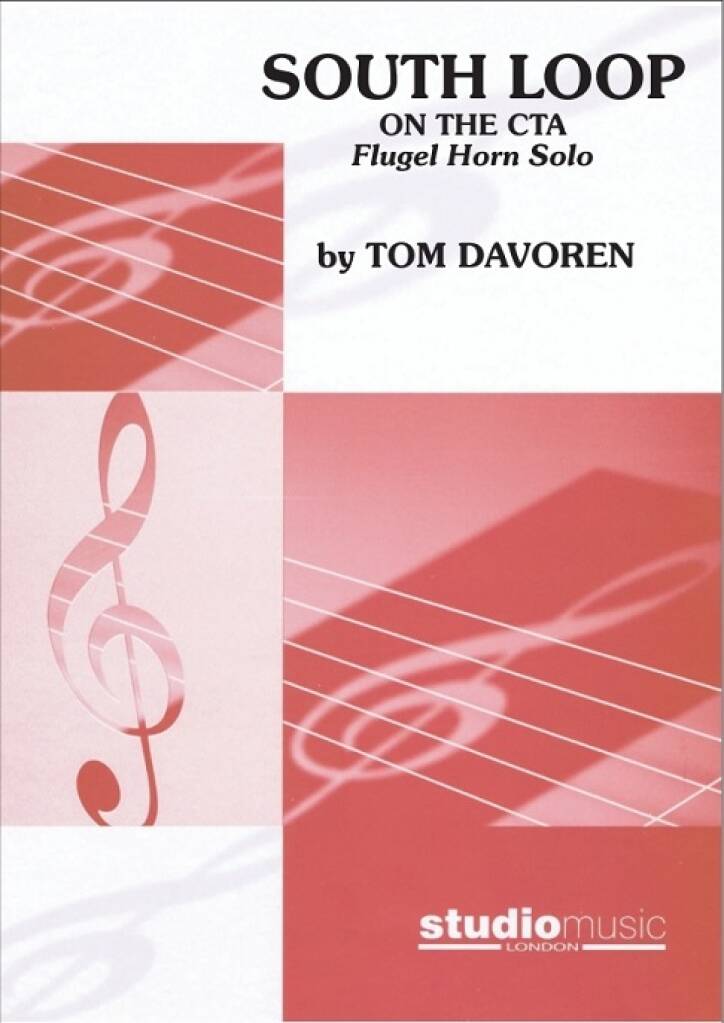
South Loop on the CTA - Tom Davoren
Tom Davoren composed South Loop in 2015 following an annual visit to the city of Chicago, in the Midwest region of the United States of America. It takes its name from a section of the "L", the famous elevated railway which is the lifeblood of thecity and its suburbs. The piece tries to capture some of the bustling energy of this Chicago landmark and the 750,000 commuters who use it each day.
Estimated dispatch 5-14 working days
-
£76.99
The Haunter of the Dark - Franco Cesarini
The Haunter of the Dark is based on a tale by the author Howard Phillips Lovecraft (1890-1937) about a deserted church, where according to an old legend a monster had been lying low for years.A scientist who studies ancient religions visits this church. Besides some ancient writings he discovers a box, which contains a luminous stone. Every time the stone sheds its light, the scientist experiences all sorts of weird visions.The church in the tale actually exists, and can be found in Providence (USA). Franco Cesarini has visited it and sketches the mysterious and occult atmosphere in "The Haunter of the Dark".
Estimated dispatch 5-14 working days
-
 £60.99
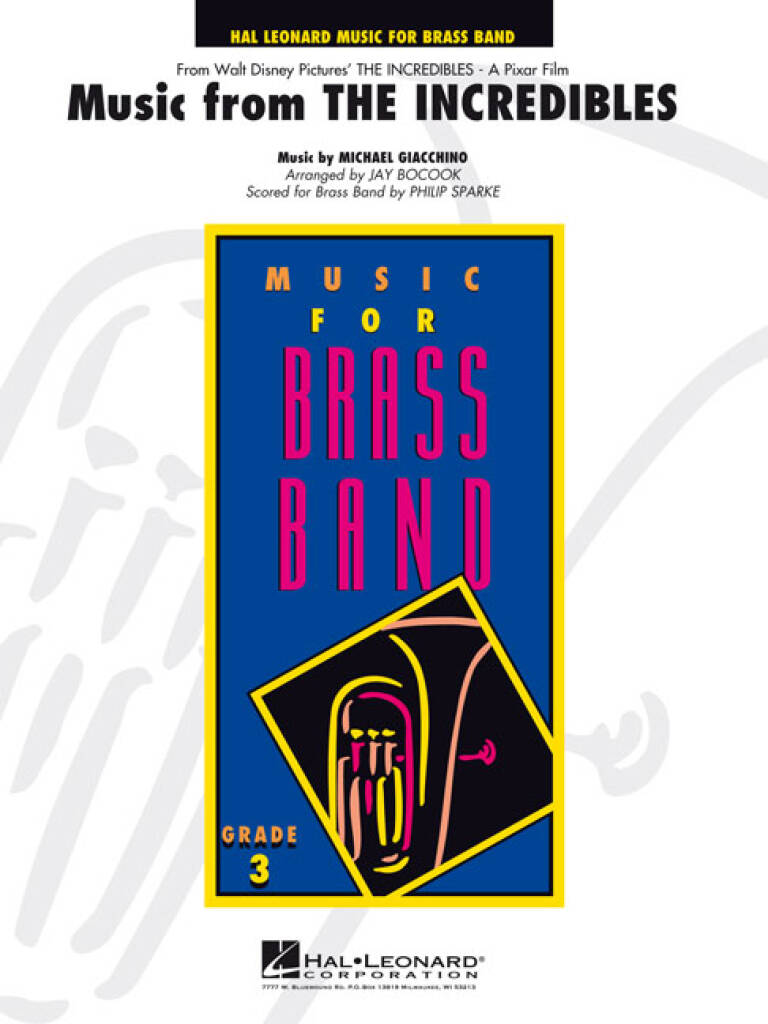
Music from the Incredibles - Michael Giacchino - Philip Sparke
The Incredibles is the latest movie from the masters of animation at Pixar Studios. The story tells of a family of undercover superheroes who, while trying to live the quiet suburban life, are forced into action to save the world. The music is inspired by 1960's TV cop dramas and spy thrillers and fits the action perfectly. This arrangement for Concert Band by Jay Bocook and Philip Sparke is guaranteed to be a sure fire hit.
Estimated dispatch 5-14 working days
-
 £60.99
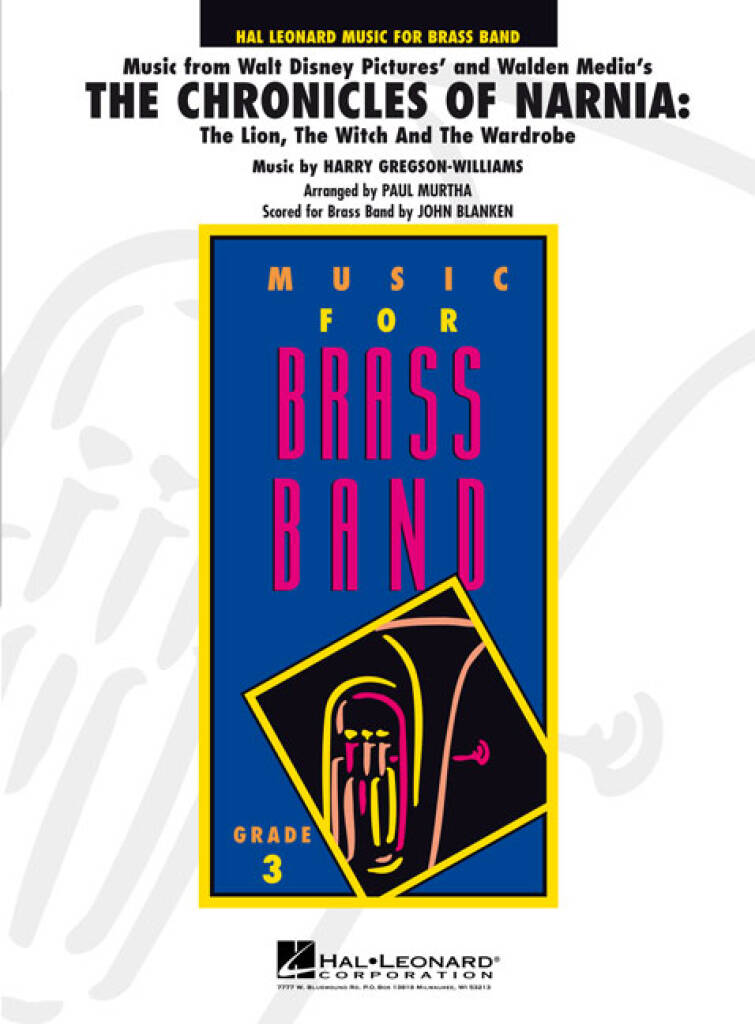
The Chronicles of Narnia - Harry Gregson-Williams - Paul Murtha
The Disney hit movie The Chronicles of Narnia tells the story of four children who travel through a magical wardrobe to the land of Narnia and learn of their destiny to free it with the guidance of a talking lion. Much of the fantastic mystical atmosphere of the movie comes from Harry Gregson-Williams fantastic soundtrack. This medley features the highlights of the original soundtrack and it is sure to be a magical success in any concert.
Estimated dispatch 5-14 working days
-
 £69.99
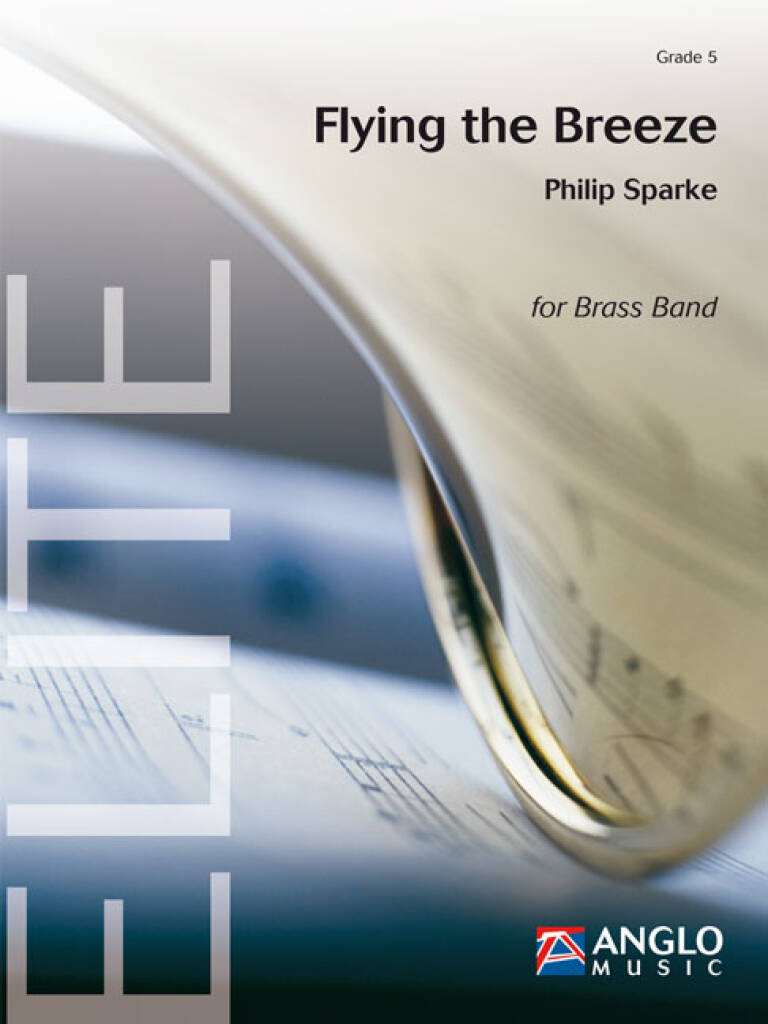
Flying the Breeze - Philip Sparke
Flying the Breeze opens with three repeated B's (representing the initials of the Breeze Brass Band from Japan who commissioned this work). A short introduction leads to a robust theme from the baritones and euphoniums which is taken up by cornets and trombones. A restless bridge passage leads to a syncopated tune from the solo cornet and then to a third theme from a solo trombone. A graceful second subject leads back to a recall of the introductory material before a full-scale recapitulation. An intense allargando leads to a full-band version of the second subject under a running cornet passage, which leads to a short coda.
Estimated dispatch 5-14 working days
-
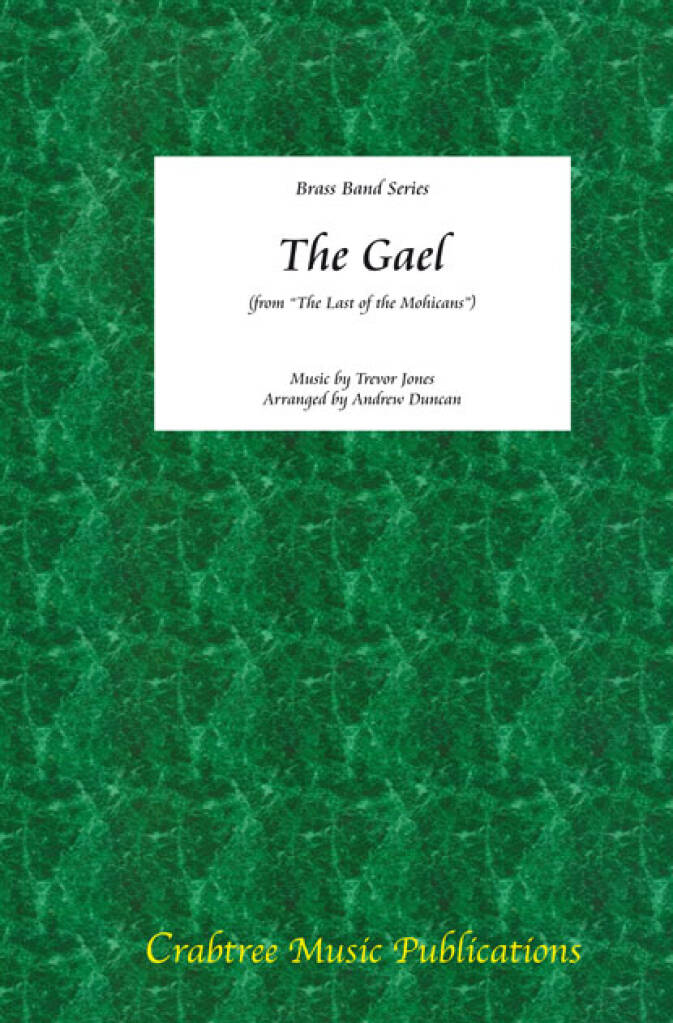 £59.99
The Gael from Last of the Mohicans - Trevor Jones - Andrew Duncan
Who can forget the epic 1992 movie, The Last of the Mohicans, starring Daniel Day Lewis. The soundtrack was written by Trevor Jones and Randy Edelman with both men on record as saying this soundtrack is one of their greatest pieces of work to date. This scintillating and powerful arrangement of the main theme, The Gael, is one not to be missed and is guaranteed to 'bring the house down' at every performance. A work that no band would want to be without!
Estimated dispatch 5-14 working days
 View Music